Product Details
Description
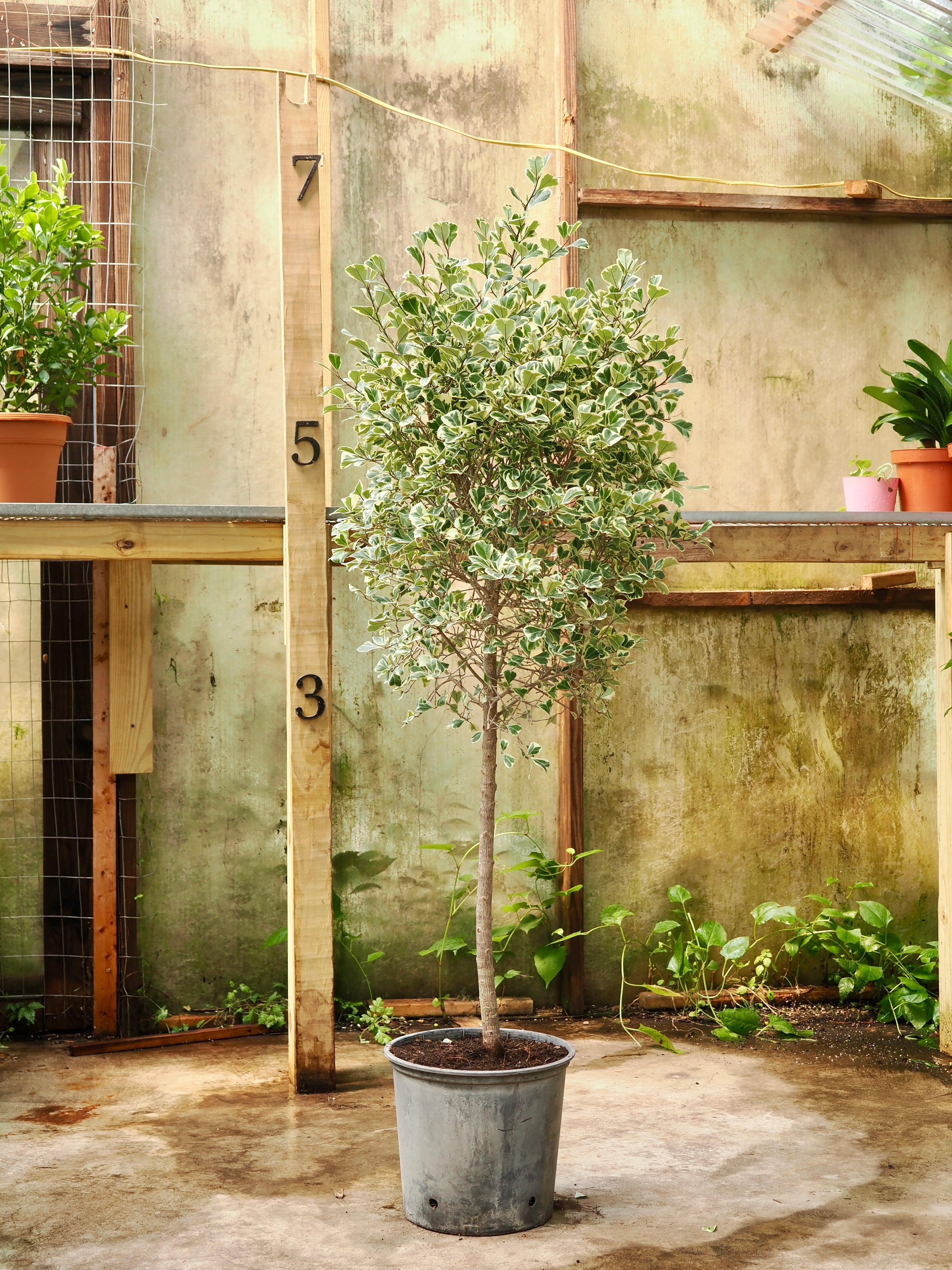
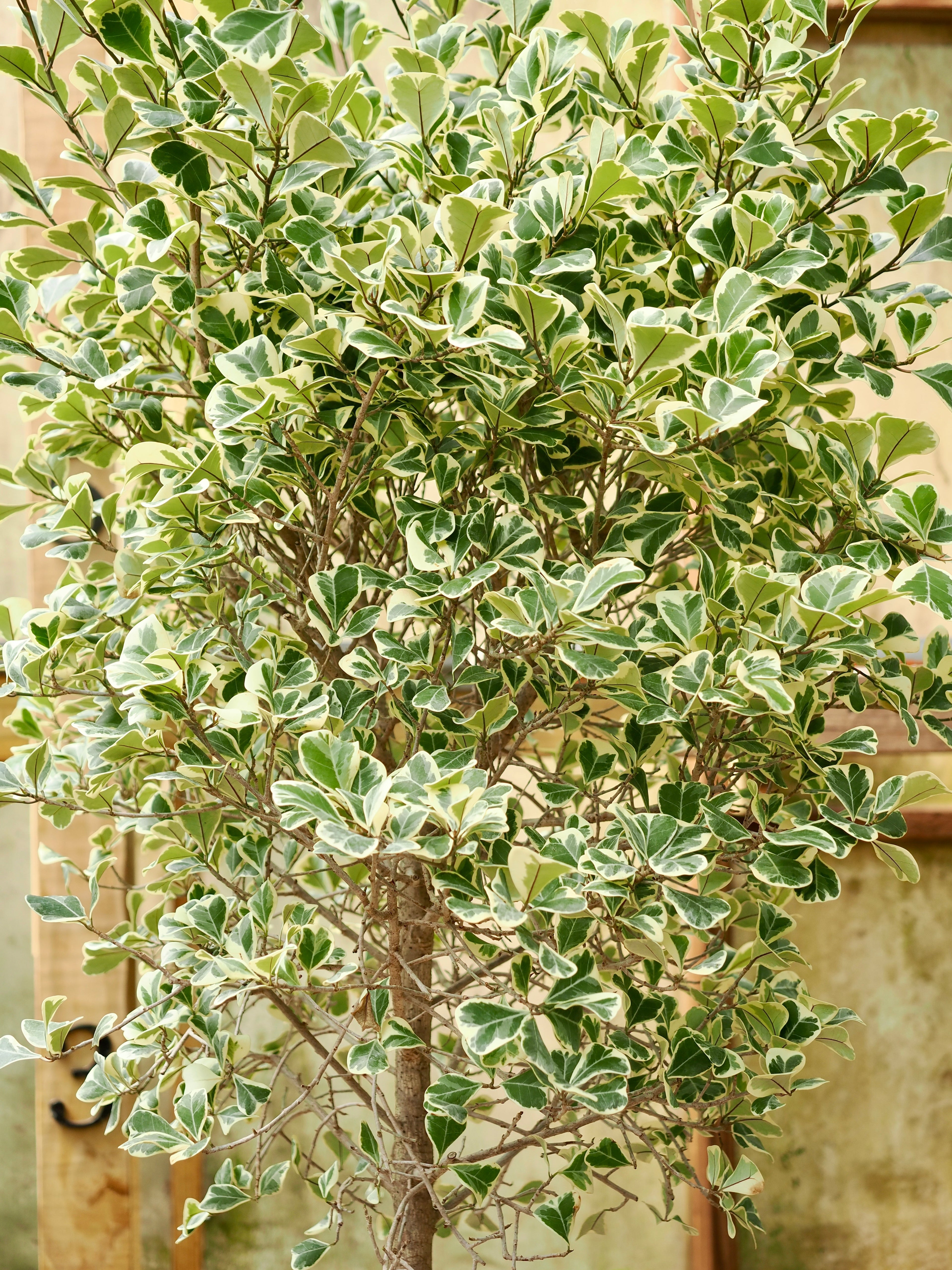
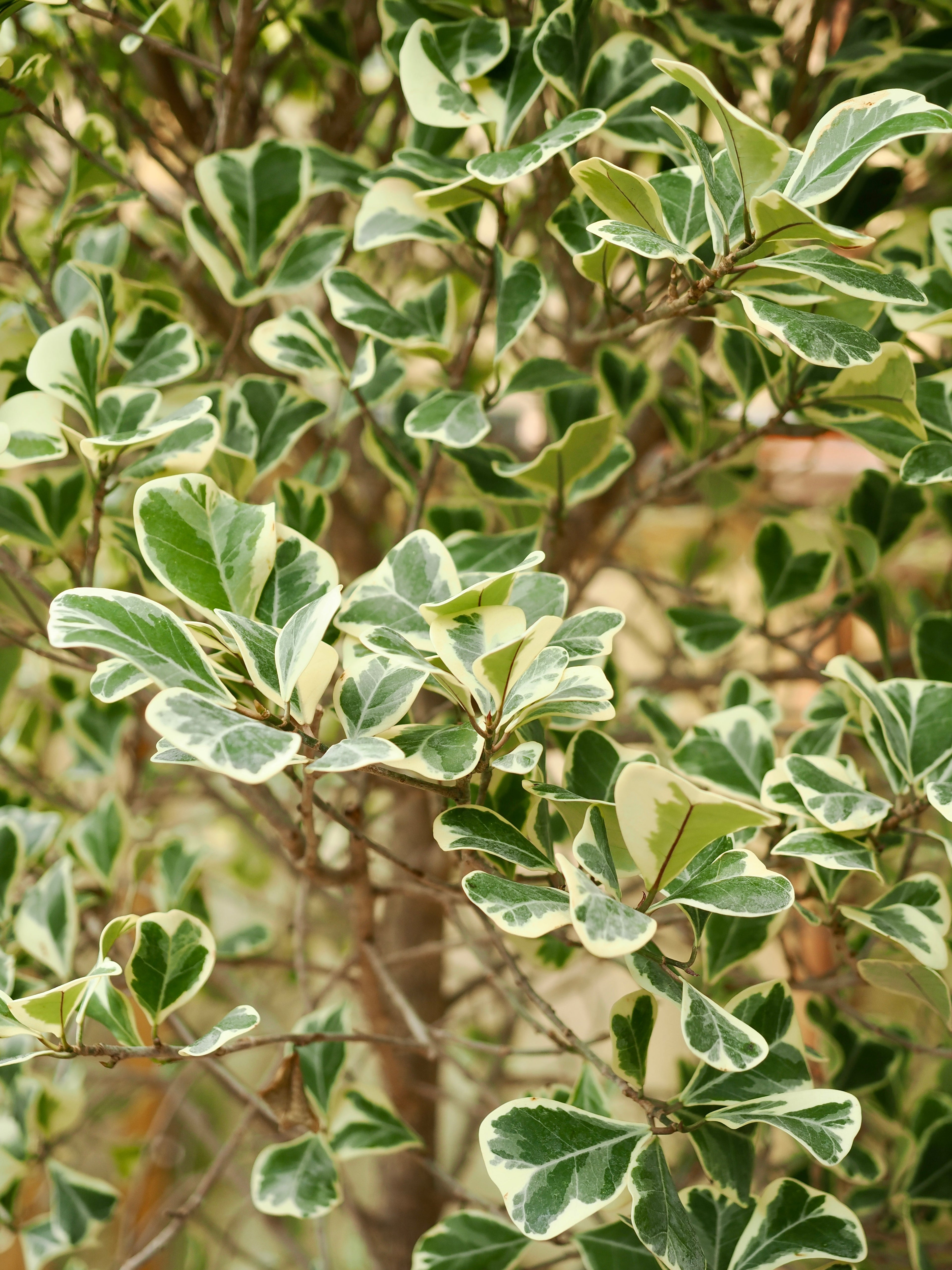
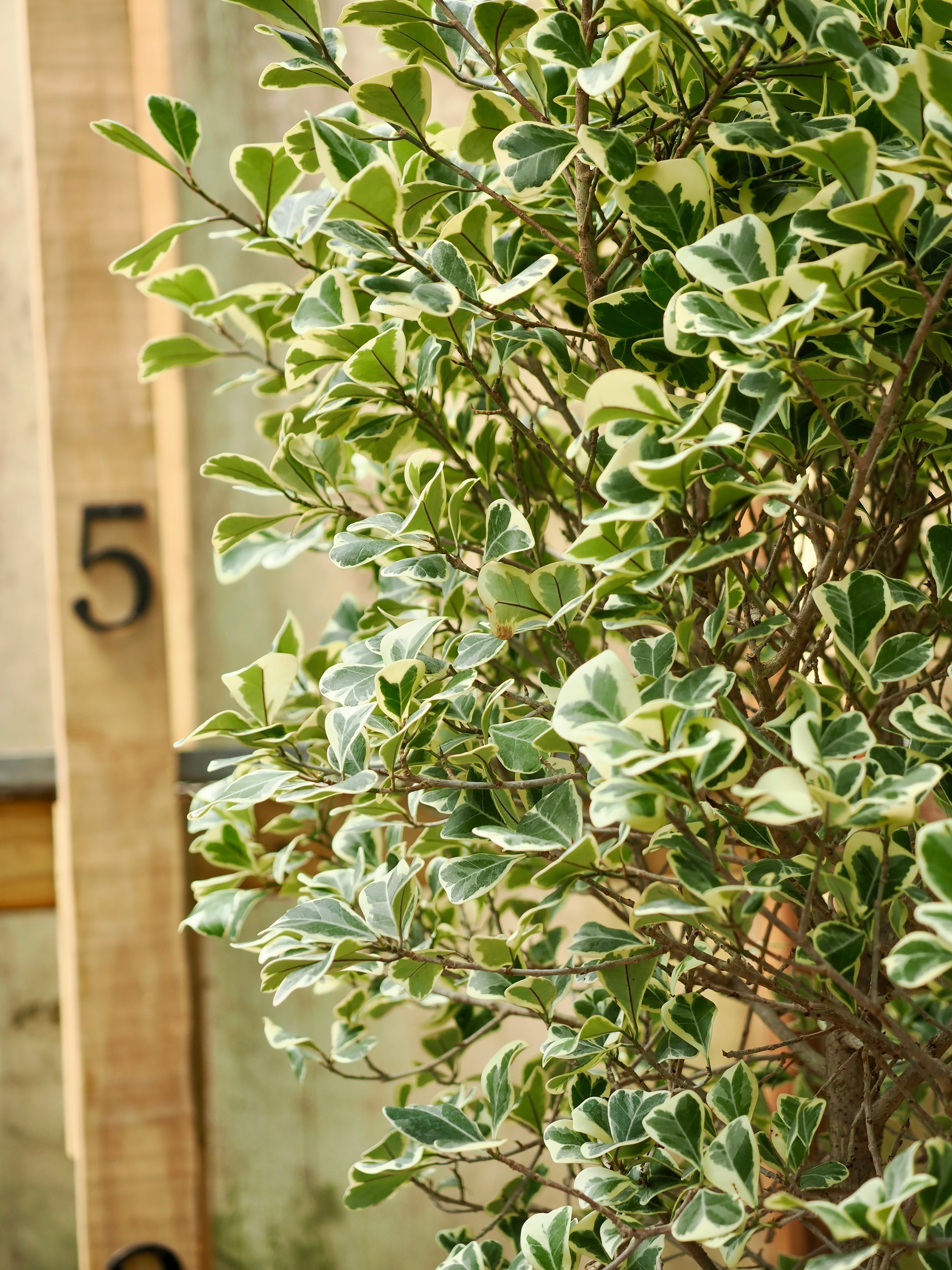
Few things beat watching a tree fruit in your own home, and the variegated Ficus triangularis is one of the rare few that will do it, setting tiny figs along its branches that ripen from cream to red while it sits by your window. Up close, every leaf earns a second look, each one small, thick, shaped like a rounded triangle and marbled in cream and green, with no two painted quite the same way. Its slim stems branch into an open, airy canopy, so it brings the height of a real tree without darkening the room. Native to the tropics of Southeast Asia, and known to plant lovers as the mistletoe fig or triangle fig, it grows slowly into a small indoor tree of around 5 to 7 feet (1.5 to 2.1 m).
A tree-sized one is uncommon, since most people only ever meet this plant as a tabletop specimen or a trained bonsai, so it makes a real conversation piece for anyone who knows their plants. Like most figs, it settles best when its spot stays consistent, so once you give it good light and leave it be, it holds onto that crisp cream-and-green foliage. If you'd like to see the shape and variegation of yours before it arrives, we can walk you through the greenhouse on a live video call and show you the exact tree you're getting.
Care
How do you care for a variegated Ficus triangularis?
Ficus triangularis care is mostly about giving it a steady, bright home and then letting it settle. Place it in good light, water it when the top inch or two of soil dries, keep it warm, and resist moving it around, and it rewards you by holding its full, variegated canopy. We're always here if you'd like a hand getting it settled.
How much light does a variegated Ficus triangularis need?
Your variegated Ficus triangularis wants plenty of bright light, with a little gentle morning or filtered sun being ideal. Good light is what keeps the cream variegation crisp, since the leaves fade toward plain green in a dim spot, though it's worth avoiding harsh midday sun through glass, which can scorch the paler patches.
How often do you water a variegated Ficus triangularis?
Water your variegated Ficus triangularis when the top 2 inches of soil feel dry, then let it drink fully and drain. It handles the odd dry spell better than most figs, so lean drier rather than soggy, and ease off in winter when its growth slows down.
Does a variegated Ficus triangularis need humidity?
This fig enjoys average to slightly above-average humidity, so it's happy in most homes and happier still with a little help in dry air. A nearby humidifier, a pebble tray, or the occasional misting all keep the foliage fresh, especially once winter heating dries the room out.
Do you need to fertilize a variegated Ficus triangularis?
Your variegated Ficus triangularis is a light feeder, so a balanced houseplant fertilizer once a month through spring and summer is plenty. Let it rest over fall and winter with no feeding, and it will pick its pace back up on its own when the brighter months return.
How do you make a variegated Ficus triangularis bushy?
To keep your variegated Ficus triangularis full and bushy, pinch or trim the stem tips in spring, which nudges the plant to branch out lower down. It takes to shaping so well that it's a favorite for bonsai, so a little regular trimming lets you keep it as compact or as tree-like as you want.
How big does a variegated Ficus triangularis get indoors?
Indoors, your variegated Ficus triangularis grows slowly to around 5 to 7 feet (1.5 to 2.1 m), maturing into a small, airy tree over time. It's happy in a snug pot rather than a deep one, so repotting up a single size in spring, only when the roots fill the pot, keeps it steady and well-proportioned.
Pet friendly?
We'll be straight with you here:
the variegated Ficus triangularis isn't pet-friendly. Like all figs, its leaves and stems carry a milky sap that the ASPCA lists as toxic to cats and dogs, and chewing it can bring on drooling, mouth or stomach irritation, and vomiting. The sap can irritate skin on contact too, so it's a plant to keep out of reach, and worth wearing gloves when you prune.
Is the variegated Ficus triangularis safe for dogs?
The variegated Ficus triangularis isn't safe for dogs, since the fig sap can cause drooling, vomiting, and an upset stomach if the leaves or stems are chewed. With a small tree, the lower branches are the ones to watch, so it suits a home where your dog tends to leave the greenery alone.
Is the variegated Ficus triangularis safe for cats?
The variegated Ficus triangularis isn't safe for cats either, as the same sap irritates their mouth and stomach and can bother their skin and paws when they groom. Cats are often drawn to low stems and to any leaves or little figs that drop, so a spot out of reach keeps them clear of it.
Factoids
Is the Ficus triangularis a rare plant?
The variegated Ficus triangularis is fairly uncommon, and a tree-sized one is rarer still, since it grows slowly and most are sold as small tabletop plants. That slow climb to full height is exactly what makes a mature specimen a prize for collectors.
Does a variegated Ficus triangularis grow figs indoors?
Yes, and that's part of its charm, since it's one of the few figs that will fruit indoors, forming tiny figs that ripen from cream to red along the branches. They're ornamental rather than something to eat, but they're a lovely surprise on a plant this size.
What else is the variegated Ficus triangularis called?
You'll see the variegated Ficus triangularis sold under a few names, including the mistletoe fig, the triangle fig or triangle-leaf fig, and sometimes the sweetheart tree, all describing the same cream-and-green plant. It belongs to the fig family, alongside the fiddle-leaf fig and rubber tree.
Can you grow a variegated Ficus triangularis as a bonsai?
Yes, the variegated Ficus triangularis is a popular choice for bonsai, since its small leaves, woody stems, and slow growth all lend themselves to training. You can keep it compact and sculpted in a shallow pot or let it grow up into a small indoor tree.
Buy a variegated Ficus triangularis
A variegated Ficus triangularis grown to tree size is a hard plant to find, and ours arrive shaped by years of slow growth, so no two branch or variegate quite the same way. If you'd like to choose yours first, book a free video shopping call and we'll show you around the greenhouse on camera, variegation and all. When you're ready, we deliver it ourselves by van and driver, upright and secure with none of the shipping-box handling, and stay on hand to help with Ficus triangularis care for as long as you own it.
Meta title (57 characters)
Variegated Ficus triangularis, rare fig | Dahing Plants
Meta description (152 characters)
A rare variegated Ficus triangularis grown to tree size, with cream-and-green leaves that fruit indoors. See it on a free video call, delivered by our van.
Plant Care Tips
Sunlight
Tolerates low sunlight or fluorescent light, but will thrive in medium, indirect light. Direct, bright sunlight should be avoided.
Maintenance
Water when top two inches of soil are dry. Water thoroughly.
Temperature
Does well at room temperature between 60°F - 77°F. Cold temperatures should be avoided.
Humidity
Prefers higher levels of humidity, around 75% or above.
Delivery Information
How much does shipping cost?
Shipping is free for orders over $150 within the US.
Otherwise it's anywhere from $5 to $19 depending on what you order and where it's going.
International orders are set at a Flat Rate of $19 for smaller goods and $69 for larger goods. This includes tracking and insurance.
How long does shipping take?
We ship out orders within 24-48 hours after you place your order. Standard shipping arrive anywhere between in 3-7 business days, while Expedited takes only 2 business days.
Returns
We gladly accept returns of unworn, undamaged or defective merchandise purchased online for delivery that shipped to a U.S. address for a full refund or exchange within 7 days from the delivery date.
For details visit our Shipping and Return Policy.
Customer Service
Happy to chat! Feel free to contact us using our form or chat service. Our hours of operations are from 11:00 am to 5:00 pm Eastern Time, Monday to Friday, not including Holidays.